Planning a Performance Evening or an Open-Ended Night Out
Planning a performance evening or open-ended night out? Choose a pace, anchor, and backup plan that fit your group and leave fewer awkward gaps.
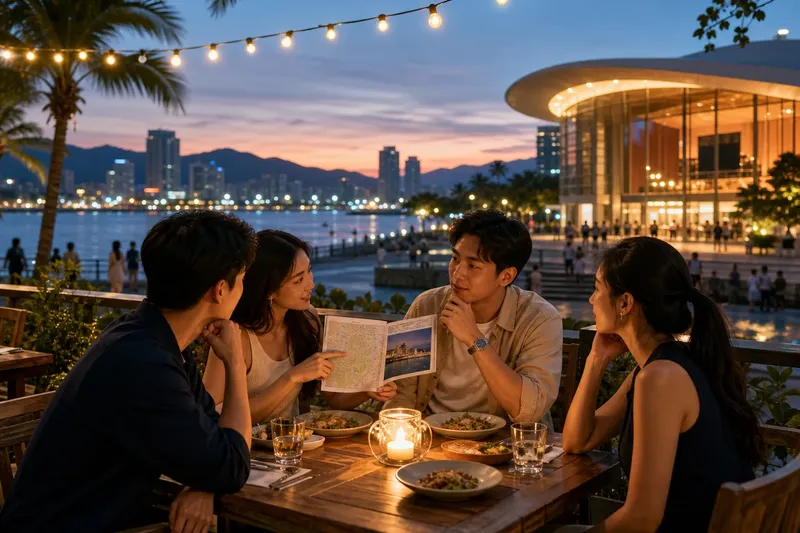
The most common mistake in planning a performance evening or open-ended night out is treating both as if they need the same timetable. A fixed show can make a loose arrival plan stressful, while an open evening can feel oddly constrained if every hour is booked. Start by deciding whether the entertainment is the anchor or simply one option among several.
Choose the kind of evening before choosing the venue
A performance evening is built around something that begins at a stated time: a concert, theatre production, comedy set, or scheduled event. The start time shapes dinner, travel, and when everyone needs to arrive. An open-ended night out has no single appointment that the group must protect. People might meet for dinner, wander along the waterfront, or decide later whether to hear live music.
In Khánh Hòa, the distinction matters because a night might combine a meal near the coast with entertainment elsewhere in the city or a resort area. The point is not to assume that one kind of venue or activity represents local life. It is to choose a rhythm that fits your companions, location, and appetite for decisions.
Ask the group one simple question: would missing the main event spoil the evening? If the answer is yes, plan around a fixed start. If the answer is no, keep the evening open and treat each activity as optional.
Set the evening’s anchor and its boundaries
For a performance evening, the anchor is the event itself. Check its start time, admission terms, venue location, and any arrival guidance before arranging the rest of the plan. Leave room for the journey and for finding the entrance, rather than scheduling dinner to finish at the last possible moment. A nearby meal or a simple snack beforehand often creates less pressure than a long, distant reservation.
For an open-ended night, choose a meeting place and a broad area rather than a chain of appointments. A café, public promenade, or restaurant can serve as a starting point. Agree on a rough point to regroup or a time to check how everyone feels, but avoid making that check-in another hard deadline.
Set boundaries too: the latest time anyone wants to stay out, the amount of walking the group is comfortable with, and whether people can split up and rejoin. These small agreements reduce friction without turning leisure into a project.
Build the schedule around pace, not just activities
A schedule can look reasonable on paper and still feel tiring. Travel between places, waiting for companions, and making choices all take attention. A performance evening usually benefits from one main event and a modest addition before or after it. An open night can hold more options, but it still needs pauses and an easy way to stop.
- For a fixed show: choose one pre-event activity that is close enough to keep arrival manageable.
- For a flexible evening: pick a starting place, then keep one or two nearby alternatives in mind.
- For a mixed group: leave space for a quiet meal or conversation, not only entertainment.
- For a late finish: decide how people will get back before the group sets out.
Say you are meeting friends in Nha Trang and one person wants a scheduled music performance while another prefers to decide as the evening unfolds. You could make dinner near the venue the shared starting point, then agree that anyone who wants the performance will leave in time for its stated start, while the others choose a nearby café and reconnect afterward. The expected observable result is a clear plan for the event-goers and a genuine choice for the rest, without asking the whole group to follow one pace.
Keep a fallback without turning it into a second itinerary
Plans change: a companion may be tired, a table may be unavailable, or the group may discover that the first idea no longer appeals. A performance evening needs a fallback that does not depend on pretending the missed event can be replaced. Consider a nearby place for a relaxed meal or conversation, and make clear that the event remains optional if circumstances shift.
An open-ended evening needs fewer contingencies. Keep one alternative within the same general area, such as another café or a public place to sit, rather than planning a full route of backup stops. It is not worth researching every possible venue or building a minute-by-minute schedule for a night whose appeal is spontaneity.
For tickets, venue access, transport, and opening arrangements, follow the relevant provider’s information and any local requirements. That is more useful than relying on assumptions based on a venue’s name or promotional description.
Which night-out format fits your plans?
How do I choose between a performance and an open-ended night?
Choose a performance if one scheduled event is the main reason for going out and the group is willing to organize around its start. Choose an open-ended plan if the pleasure lies more in conversation, food, or deciding together as the evening develops.
Can a group combine both kinds of evening?
Yes: make a shared meal or meeting point the anchor, then let people opt into the scheduled event or continue with a flexible plan. Agree on where and how you will reconnect so the choice does not become a search for missing companions.
How much should I plan for an open-ended night out?
Set a meeting place, discuss a comfortable end point, and identify a nearby alternative in case the first choice does not suit the group. Leave the rest undecided unless someone needs a specific arrangement.
What should I do if someone dislikes the fixed schedule?
Offer a real alternative rather than asking them to wait through an event they do not want to attend. A nearby meal or café can preserve the shared outing while allowing each person to choose a suitable pace.
Make the final choice easy to change
Before leaving, tell the group which parts are fixed and which are optional. For a performance evening, that means naming the event start and the latest sensible departure time. For an open-ended night, it means stating where to meet and making clear that the next stop is a choice, not an obligation.
Planning a performance evening or open-ended night out works best when the schedule matches the reason people are meeting. Protect the fixed moment if it matters; otherwise, give the group enough structure to meet comfortably and enough room to decide what comes next.