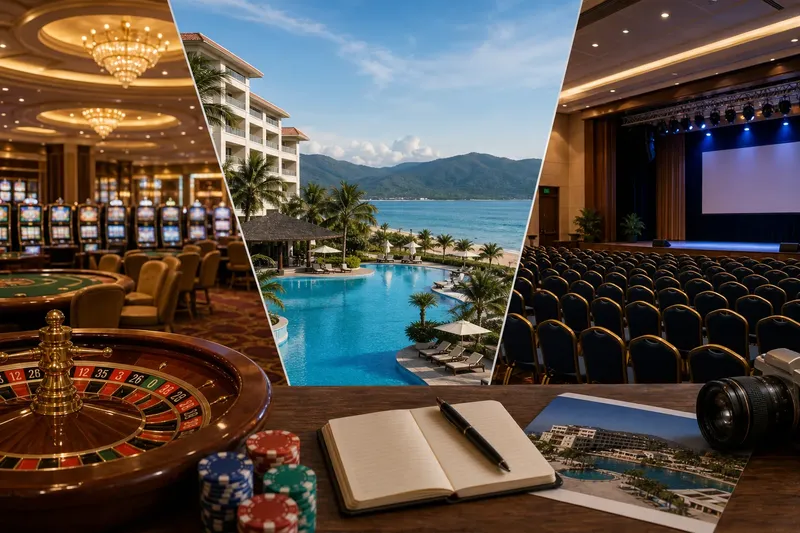
The Casino as a Film Setting, Not a Map
Casino film settings turn tables, lights, and crowds into story signals; learn how to read the mood without mistaking cinematic shorthand for visitor information.
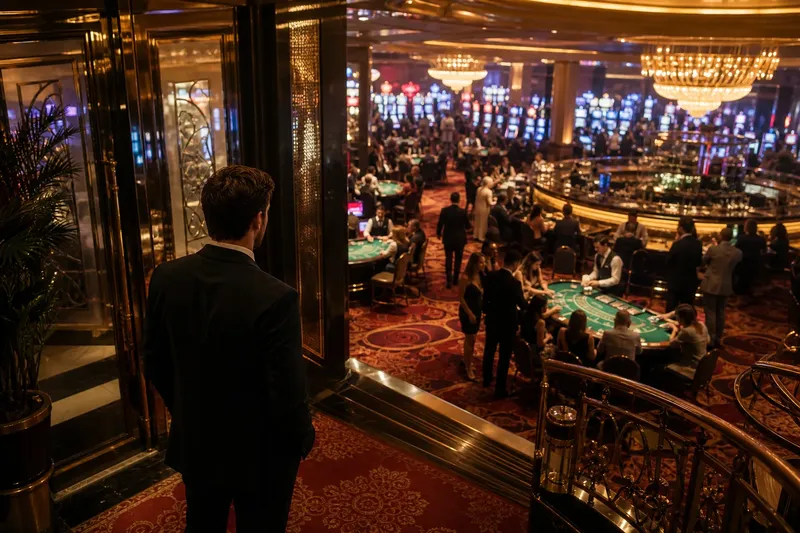
The most common mistake in reading a casino scene is treating its polished image as a portrait of a real venue. A casino film setting is built to shape mood and move the plot, and confusing that craft with visitor information can leave you with a false picture of how a place works.
Here are seven ways filmmakers use casinos as story spaces—and what each choice tells you about the film, rather than about a destination.
1. The entrance marks a change in the story
A character crossing a casino threshold often enters a space with different rules. The door can separate a quiet street from a dazzling interior, or a familiar routine from a night of risk. Filmmakers use that crossing to signal a decision before the character has made it clear in words.
Notice what the camera shows at the entrance. A slow approach can make the casino feel imposing; a quick cut from the street to a crowded gaming floor can make arrival seem effortless. Either way, the edit compresses the practical details of getting inside. It does not tell you what a real venue requires of visitors, what services it offers, or whether it is open to the public.
The entrance can also work as a boundary between social worlds. A character might step into a space where status is displayed through clothing, gestures, or who is recognized. That is a dramatic arrangement, not a reliable guide to the people or policies of any particular casino.
2. Light and color establish the emotional temperature
Casino scenes often use concentrated light, reflective surfaces, and saturated color to make the setting feel heightened. Warm golds can suggest luxury or temptation; cool blue light may make the same room seem distant and watchful. The meaning depends on the scene around it, not on a fixed visual code.
Look for contrast. A character’s face may be clearly lit while the room behind them dissolves into blur, making private uncertainty stand out against public spectacle. Or the camera may keep the character small beneath bright signs and chandeliers, turning the environment into an apparent force.
These choices are part of cinematography: the planned use of lighting, color, lens, and camera position to shape what viewers notice and feel. A film’s visual palette cannot tell you the actual lighting conditions, layout, or atmosphere of a venue. It tells you how the director wants this scene to read.
3. The camera chooses what counts as casino life
A casino can contain many kinds of activity, but a film selects only the details needed for its story. A close-up of cards may make a scene about calculation. A sweeping view of a busy floor may emphasize scale, distraction, or social energy. A quiet corner may turn the setting into a place for secrecy.
That selection creates a point of view. If the camera stays close to one character, the room may feel confusing because the audience has only partial information. If it glides across tables and guests, the scene may suggest abundance or surveillance. A smooth camera move is not a neutral tour; it directs attention as deliberately as dialogue does.
Sound works in the same selective way. The soundtrack might bring forward the clink of chips or the hum of conversation, then soften everything else when a character notices a threat. The resulting soundscape is designed for emphasis. It should not be mistaken for a description of what a visitor would hear in a real room.
4. Tables and games become shorthand for character
Writers and directors often use a game as a fast way to suggest how a character behaves. Someone who waits, watches, and speaks sparingly can seem controlled; someone who acts impulsively can seem reckless. The game becomes a stage for qualities the story wants to reveal.
That shorthand can be compelling, but it is not a dependable explanation of games, odds, or player behavior. A film may omit the rules, skip the ordinary pauses, or rearrange events so a key decision lands at the right moment. The scene is serving dramatic clarity, not instruction.
Imagine a fictional scene in which a cautious character studies a card table, then declines to join because a companion has become visibly distressed. The choice can show attentiveness and loyalty; the expected on-screen result is a change in their relationship, not a lesson about how to play. The table gives the story a visible place to stage the decision.
5. Crowds make the room feel public or isolating
Background performers can make a casino seem lively, anonymous, or unnervingly controlled. A crowd moving in several directions can make a character appear lost in the flow. A room full of people who barely look up can create a different kind of loneliness: the character is surrounded, but unseen.
Filmmakers can also use repeated gestures and carefully arranged movement to make the setting feel choreographed. Guests may seem to drift toward the same bright area, or a staff member may cross the frame at just the moment a character needs help. Such timing makes the space feel connected to the plot.
Do not infer the usual pace, social mix, or service style of a real venue from background action. Extras are positioned to fill the frame and support the scene. Even a convincing crowd is an artistic construction, not a visitor report.
6. Editing turns a room into a plot mechanism
Editing decides how much time the audience spends in the casino and what events appear to connect. A film might cut from a character’s arrival to a tense exchange, leaving out the intervening moments. It might alternate between two tables to make separate conversations feel linked, or hold on one face while the room continues around it.
These choices give a setting narrative work. A cut can make the casino feel like a maze, a stage, or a place where several plans are unfolding at once. Yet the apparent geography may not match a real building. Scenes can be filmed on a set, in selected locations, or across different spaces joined through editing.
When watching, ask what the edit wants you to assume. Does a quick transition suggest that a character has lost track of time? Does a repeated view of a doorway make escape seem possible or blocked? Those questions reveal the film’s design without turning the sequence into a floor plan.
7. The ending gives the casino a moral meaning
By the end of a casino sequence, the setting may stand for ambition, danger, escape, excess, or a test of trust. That meaning grows from the plot and the film’s wider point of view. One story may treat the casino as a glittering refuge; another may frame the same kind of room as a trap.
Pay attention to consequences. If a character leaves changed, the casino may have functioned as a pressure chamber where hidden motives became visible. If the scene ends before any consequence appears, the location may be serving as atmosphere or a temporary stage for a different conflict.
It is not worth trying to decode every decorative object as a hidden symbol. A bright sign or polished surface may simply help the audience recognize the location quickly. Focus instead on repeated visual choices and on what changes for the characters after the scene.
What can a casino scene tell you about the real place?
Can a film show what a casino is like to visit?
It can suggest a mood or make a venue recognizable, but it is not a dependable account of access, services, rules, or current conditions. Treat the scene as storytelling, then consult the venue’s own information if you need practical details.
Why do casino scenes often look more dramatic than ordinary rooms?
Lighting, framing, sound, and editing concentrate attention on the conflict. The film may also simplify the space so viewers can follow the characters and stakes without distraction.
Does a game shown in a film explain how to play it?
Not necessarily. Scenes may leave out rules or alter the sequence of play for clarity and pace, so a dramatic moment should not be treated as instruction.
How can I separate cinematic mood from visitor information?
Ask whether a detail helps communicate a character’s feeling or advances the plot. For opening details, access, services, or policies, use current information from the venue rather than an image made for a film.
Read the scene as cinema, then check the place separately
A useful viewing habit is to name the job each detail performs. A doorway may mark a threshold, a spotlight may isolate a character, and a crowd may make them feel anonymous. Once you can identify those choices, the casino becomes easier to read as a designed story environment.
The main phrase, casino film setting, describes a cinematic device—not a destination category. A film can offer a memorable impression of Khánh Hòa or any other place, but its production choices do not establish what visitors will encounter there. Keep the image for interpretation, and use current, direct sources for practical plans.