What a Place Name Can and Cannot Tell You About a Casino Story
Learn how to read a place name in a casino story without mistaking a location clue for proof about the venue, its history, or local life.
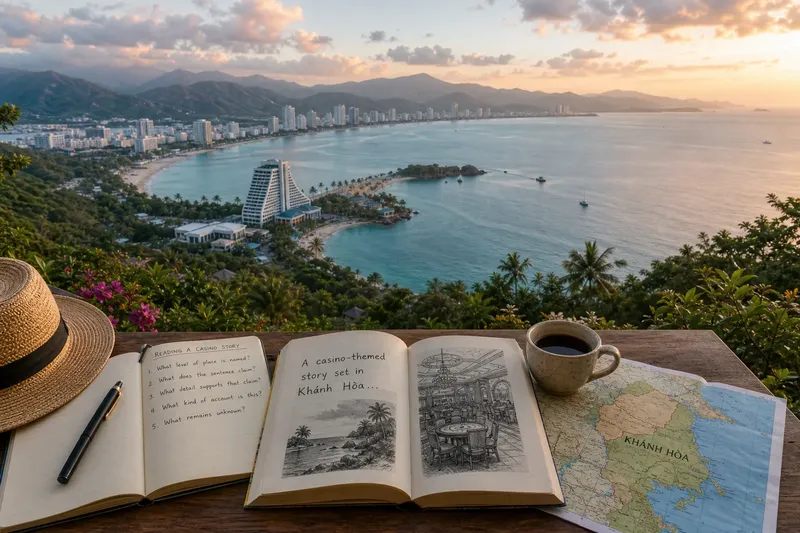
The most common mistake in reading a casino story is treating its place name as proof of what happened there. A place name in a casino story can point to a setting, but it cannot by itself establish the venue’s identity, activities, history, or relationship to local life. Keeping those questions separate prevents a familiar destination name from doing more evidentiary work than the story supports.
Start with the question the place name can answer
A place name is a label for a location, not a complete description of it. “Khánh Hòa,” for instance, identifies a province in Vietnam; it does not tell a reader whether a casino is located there, whether a story is factual, or whether a named place is being used as shorthand for a wider setting.
Begin by asking what the name actually locates. It may refer to a province, a city, a neighborhood, a building, a resort, or a fictional place. Those levels are not interchangeable. A province name can provide regional context without locating an event at a particular property.
Then separate the name from the claim attached to it. “A story set in Khánh Hòa” is a claim about setting. “A casino in Khánh Hòa hosted the event” is a claim about a specific venue and occurrence, requiring details beyond the province name.
Choose your reading path based on the claim
If you only need the broad setting, keep the name broad
If you are trying to understand where a story is generally situated, a regional name may be enough. It can orient you to a place without requiring you to identify a particular building or business.
Use this reading when the account is clearly atmospheric, fictional, or concerned with regional references. Do not turn the setting into a claim that a real venue exists or took part in the events described.
If you need to identify a venue, look for a venue name
A province or city name is not a venue identifier. A specific property name, address, or other distinguishing detail is more useful for deciding which location a writer means.
If the story offers only a broad place name, the sensible conclusion is that the venue remains unidentified. Do not fill the gap with a nearby hotel, resort, or entertainment business simply because it sounds plausible.
If you are judging whether an event happened, seek event-specific context
A location label does not establish that an event occurred. Look for the account’s date, named participants, source, and description of what happened; assess those details on their own terms rather than treating geography as corroboration.
For a fictional or promotional story, the place name may be part of the presentation rather than a record of an actual event. The wording and genre matter: a scene described as imagined should not be read as a report about local activity.
If you are considering local meaning, distinguish reference from representation
A named place can give a story a local frame, but it does not show how residents view casinos or how casino themes fit into everyday life. Those are broader questions that call for relevant local voices and context, not inference from a place label.
Read carefully for whose perspective the story presents. A narrator’s description, a business’s promotional language, and a resident’s account are different kinds of speech, even when they name the same place.
What can a place name tell you, and what remains open?
Does naming Khánh Hòa mean a casino is located there?
No. The name identifies a province, but a story may use it as a regional setting, a reference, or a fictional backdrop. A specific venue claim needs more precise identification.
Can a place name confirm that a casino story is true?
No. A recognizable location can make a story sound grounded, but it does not verify an event or the people involved. Treat factual claims as separate from the setting and look for information that addresses those claims directly.
What if the story names a resort but not a casino?
Keep the wording exact. A resort name identifies the property mentioned, but it does not establish that casino activity occurred there or that the writer means a particular venue within it.
How should I read a fictional place name?
Read it as part of the story’s constructed setting unless the work clearly presents it as a real location. Similarity to a real place is not enough to identify a venue or attribute real events to local people.
Use a small claim check before drawing a conclusion
When a place name catches your attention, sort the statement into a few simple questions:
- What level of place is named? Province, city, district, property, or fictional setting?
- What does the sentence claim? A general setting, a venue’s presence, an event, or a local attitude?
- What detail supports that claim? A name alone, or specific information about the property and event?
- What kind of account is this? Fiction, promotion, commentary, or reporting?
- What remains unknown? State the gap plainly instead of resolving it by assumption.
These questions are not a research project for every casual mention. It is not worth trying to identify a real property when the story gives no indication that its setting is intended to be factual. In that case, the useful reading is simply that the name provides atmosphere or orientation.
Keep the conclusion proportional to the name
Say you read an invented story that places a casino-themed scene in Khánh Hòa but names no town, property, or real participants. The name gives you a regional frame; it does not identify a real casino or establish that the scene occurred. The proportionate conclusion is that the story uses Khánh Hòa as its stated setting, while the venue and event remain unspecified.
That distinction helps with more than fiction. In news, travel writing, promotional copy, and casual conversation, the same location can be used at different levels of precision. A careful reader notices whether the wording moves from region to venue to event—and asks what supports each move.
When you encounter a casino story tied to Khánh Hòa, use the place name to orient yourself, then stop where its evidence stops. That gives the name its proper value without turning a geographic clue into a claim about a venue or the people who live nearby.